

The best workshops don't give a team the answer.They help the team find it.
Sometimes a team does not need another programme. It needs one honest conversation, or the right experience at the right moment.
Perhaps trust has slipped. People are avoiding a difficult conversation. A new team needs to come together quickly. Or everyone knows something is wrong, but nobody knows how to change it. We design around the real challenge the team is facing, then use dialogue, games, simulations and real-world practice to help people see the pattern, experiment with something different and work out what to do next.
Who tends to call us
- Teams who keep circling the same issue without resolving it
- Leaders who want people to practise a behaviour, not just hear about it
- Organisations building psychological safety, collaboration, strategic thinking or new ways of selling and working
How it works
- 1Diagnose. We find the pattern the team is actually stuck in, not simply the one the brief assumes.
- 2Design. We choose the method that fits - facilitated dialogue, a game, a simulation, real-play or a combination.
- 3Experience. People participate, experiment and make their own connections rather than being told the answer.
- 4Embed. We turn what happened in the room into something the team will actually do differently.
What is included
- Tailored facilitated dialogue, games and simulations chosen for your context
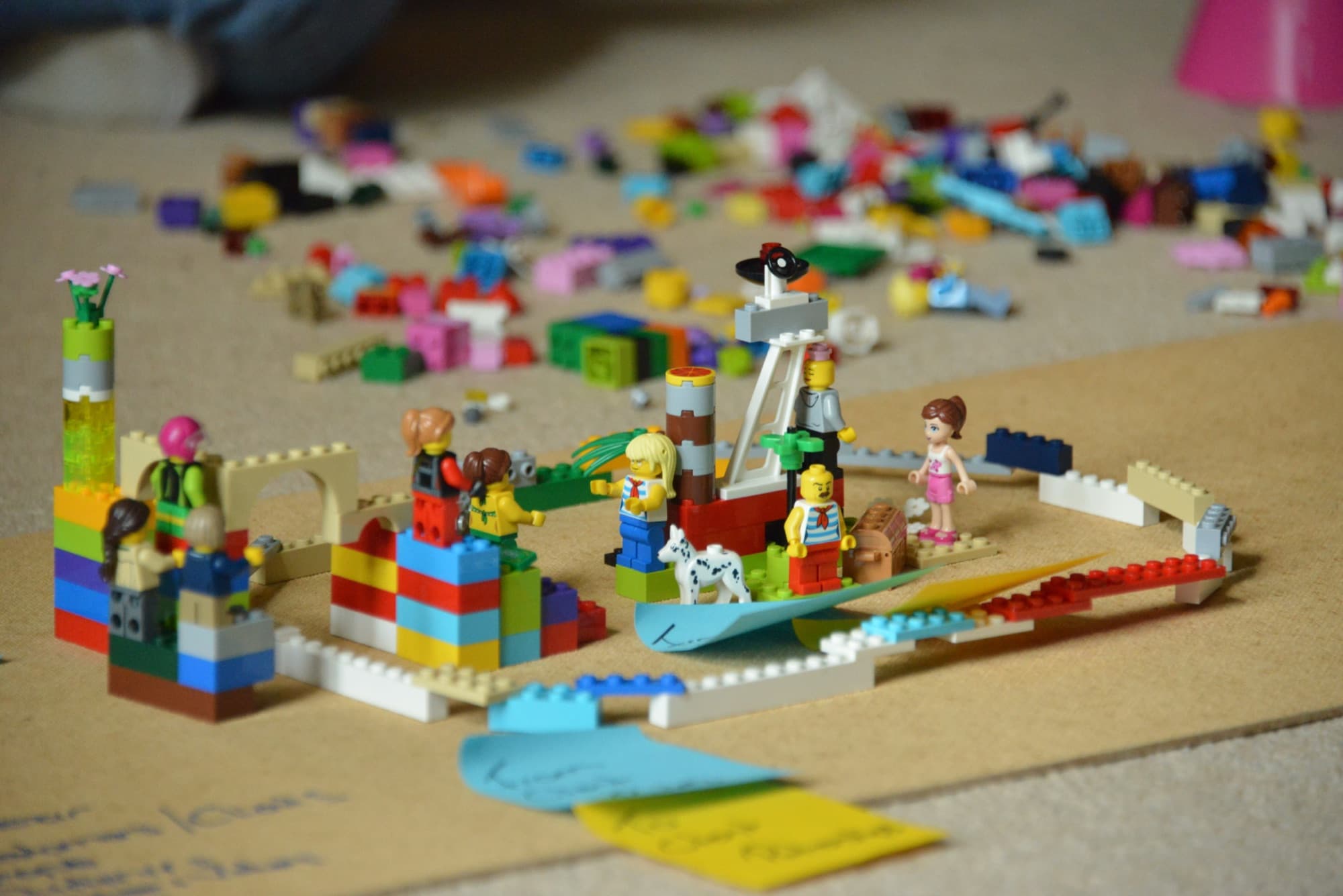
- Tools including the Builders Game, Digital Escape Room, Loves, Fears and Hopes, Lego system mapping and the Organisational Simulation
- Psychological safety and trust-building sessions for teams under pressure
- Real-world scenarios and practice for teams who need to build capability, not just discuss it
- Delivery in person, online or hybrid
For Matalan, our Psychological Safety sessions focused on trust and openness for high-performing teams.
For HSBC, Sales and Selling Leaders workshops combined role-play, real-world scenarios and actionable techniques to build confidence and drive results.
A workshop works when the team leaves able to do something it couldn't do before.
Design a workshop